




Clean Room validation
Clean Room validation

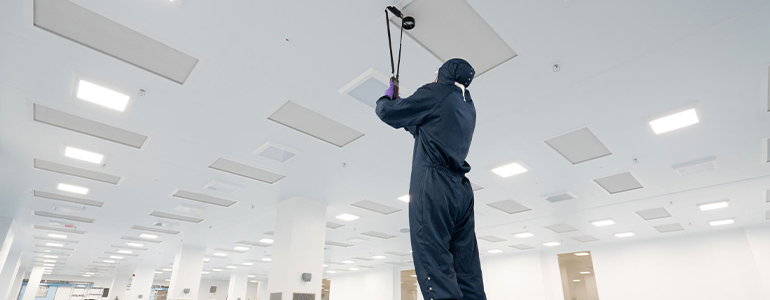

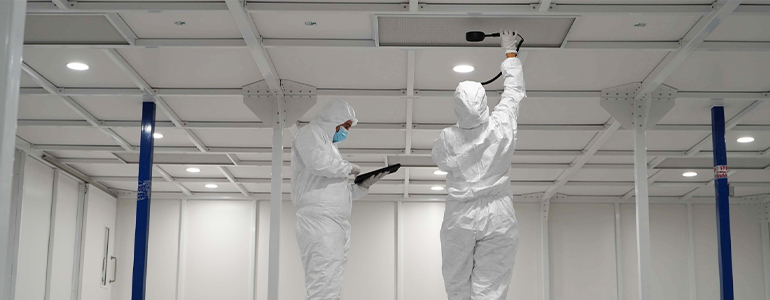
We can validate the cleanroom design, operation, and performance with the below test;
Particle Count Test
Cleanrooms are classified based on the maximum allowable number of particles per cubic meter (or cubic foot) of specified sizes. Ensuring low particle counts is crucial for manufacturing high-quality products, especially in industries like pharmaceuticals, chemicals, biotechnology, semiconductor or electronic manufacturing, and aerospace. By performing regular particle count tests, cleanroom operators can monitor and maintain the required air cleanliness, thus protecting products, processes, and personnel from contamination risks.
HEPA Filter Integrity Test (POA Test)
The HEPA filter integrity test is a vital procedure in cleanroom environments to ensure that High-Efficiency Particulate Air (HEPA) filters are functioning correctly and effectively removing airborne contaminants. This test checks for leaks or defects in the filters and their installations.
Air Velocity Test
The air velocity test in a clean room measures the speed of air movement within the controlled environment. This test is crucial for ensuring that the cleanroom maintains the necessary airflow patterns and rates to effectively control contamination levels. It also checks the blockage of the HEPA filters and ensures the airflow through the HEPA filters meets the requirements.
Recovery Test
The recovery test in a cleanroom is designed to evaluate how quickly the cleanroom can return to its specified cleanliness level after being intentionally contaminated. This test assesses the efficiency of the cleanroom’s air handling and filtration systems in removing airborne particles and restoring clean conditions. Performing regular recovery tests is essential for maintaining the integrity and functionality of cleanroom environments.
Air Flow Pattern Test
The airflow pattern test in a clean room evaluates the direction and behavior of airflow within the controlled environment. This test ensures that the air handling systems are functioning correctly, promoting the effective removal of airborne particles and preventing contamination.
Pressure Differential Test
The pressure differential test in a cleanroom measures the pressure differences between adjacent areas or zones within the controlled environment. This test ensures that the cleanroom maintains proper pressure differentials to control the flow of air and prevent contamination from entering clean areas.
Temperature and Humidity Mapping
Temperature and humidity mapping in a clean room involves measuring and analyzing the distribution and stability of temperature and humidity levels throughout the controlled environment. This process ensures that the cleanroom maintains the specified environmental conditions necessary for product quality, process integrity, and regulatory compliance.
Cleanroom Validation is the process of ensuring that a cleanroom meets the necessary standards and specifications for controlling contamination. Cleanrooms are critical environments where the concentration of airborne particles is controlled to specified limits. They are essential in industries such as pharmaceuticals, biotechnology, medical devices, and electronics manufacturing.
@ Copyright by Mastertech systems. All Rights Reserved & Design By SSR Web Solutions